

The Sublime Guides
Writings on Sri Aurobindo and the Mother
— Manoj Das
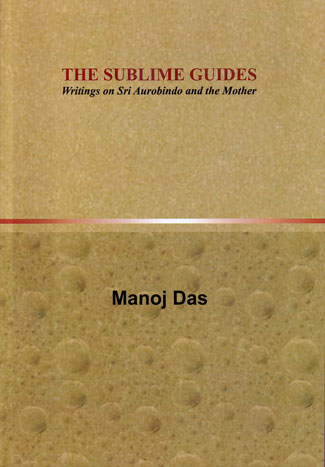
| Price: Rs 350 Pages: 209 Dimensions (in cms): 14x22 ISBN: 978-81-967004-9-2 | Soft Cover | |
| Publisher: Overman Foundation, Kolkata | ||
 | ||

|
Your cart is empty... |
About The Sublime Guides
The Sublime Guides is a collection of writings by Manoj Das on the life and work of Sri Aurobindo and the Mother. This anthology includes articles originally serialised in The Sunday Standard in 1972, alongside other essays and articles that appeared in newspapers and periodicals such as The Hindu, The Heritage, and a few others. The initial articles highlight the impact of Sri Aurobindo's remarkable contribution to and early leadership of India’s freedom struggle. Given their publication history across several decades there is naturally a repetition of many of the themes and facts in the accounts of Sri Aurobindo’s political life, his sadhana in Pondicherry, the arrival of the Mother, and the formation and purpose of the Sri Aurobindo Ashram. The book ends with a summary of Sri Aurobindo’s life and work and his vision for the future taken from the preface of the booklet published by NCERT containing the first Sri Aurobindo Memorial Lecture, given by Manoj Das in 2008.
REVIEW
The idea to publish this book goes back decades to the birth centenary year of Sri Aurobindo in 1972. It was then that Manoj Das wished to gather all his writings on Sri Aurobindo, but due to a change in his residence, he seemed to have misplaced most of them. In 2023, more than fifty years later, Anurag Banerjee, the compiler of this book, by a sheer stroke of luck managed to collect all the missing articles, thus bringing The Sublime Guides to life, although Manoj Das was no longer in his body to witness it. Most of the articles produced in this book were written and published in the year 1972; a select few were published thereafter.
The book begins with a series of articles on Sri Aurobindo’s early life and his contribution to India’s freedom struggle. It first presents Sri Aurobindo as a patriot and a prophet of nationalism. However, even through his early life and political career, the vast intelligence and the sublime vision behind all his actions is evident to readers.
In February 1893, when the anglicised Aurobindo Ghose returned to India, a vast calm descended upon him as soon as he set his foot on Indian soil. He immediately recognized India not as a piece of land but as the power, the godhead — Mother India. Indignant in the face of India’s acquiescence to British rule, he determined to work for the freedom of India. In a letter to his wife, Sri Aurobindo writes, “…while others look upon their country as an inert piece of matter — a few meadows and fields, forests and hills and rivers—I look upon my country as the Mother…What would a son do if a demon sat on his mother’s breast and started sucking her blood?… I know I have the strength to deliver this fallen race.” (Letter of 30 August 1905 written to his wife Mrinalini Devi in Bengali.) In one of his articles, Manoj Das concludes, “This dormant truth, resurrected by the golden touch of his own sincerity, became a mighty and unifying emotion.”
One of the most striking features of Sri Aurobindo’s personality in these initial chapters is his heroic courage. In the words of Henry W. Nevinson, the British war correspondent, “Grave with intensity, careless of fate or opinion, and one of the most silent of men I have known, he was of the stuff that dreamers are made of, but dreamers who act their dreams, indifferent to the means.” Sri Aurobindo was the first among the nationalist leaders to demand complete independence (poorna swaraj), and soon after, the entire nation was reverberating with the rallying chant of Bande Mataram. Lord Minto, the then Governor-General of India, remarked, “There is no doubt at all that we are confronted by a revolutionary movement the object of which is to drive us out of India by means of intimidation… The worse of it is that young men are being drawn into the plot all over the country… He (Sri Aurobindo) is the most dangerous man we have to deal with at present.”
Another aspect of Sri Aurobindo’s personality that touches the reader’s mind is that he did not act from an ordinary plane of consciousness. Behind all his actions we see a steadfast spiritual force that persisted until the desired outcome was realised. In his words, “Very few people knew that it was I who gave the order that led to the breakup of the congress… Even my action in giving the movement in Bengal its militant turn or founding the revolutionary movement is very little known.” Much later, in reply to a question by a disciple, Sri Aurobindo said, “History very seldom records the things that were decisive but took place behind the veil; it records the show in front of the curtain.” All principles enunciated by him, such as swadeshi, boycott, and non-cooperation, remained steadfastly prominent in the achievement of Indian Independence.
When one looks at the early life of Sri Aurobindo, one can see the fulfilment of the promise that Lord Krishna makes to humanity in this celebrated verse from the Bhagavad Gita:
Yadā yadā hi dharmasya glānir bhavati bhārata abhyutthānam adharmasya tadātmānaṁ sṛjāmyaham
Whenever there is a decline in dharma (righteousness)
and an increase in adharma (unrighteousness), at that time, I manifest myself.
However, to re-establish dharma was not the only goal; Sri Aurobindo had another purpose to serve, and this purpose acquired a clear vision after his arrest in the Alipore Bomb trial. Shortly after his release from Alipore Jail, Sri Aurobindo retired from active politics and took up residence in Pondicherry, then part of French India. In his seer-vision he had already seen India’s independence as inevitable. He was called now to a very different work, marking the beginning of a new chapter in Sri Aurobindo’s life and mankind’s destiny. In this context Manoj Das writes, “Sri Aurobindo had not rejected life; far from that, it was in quest of – and with certainty of – a greater life on earth for man that he had retired from politics. He knew that he was destined to pave the way for the advent of the era of Supermind. It required a mighty effort, a Yoga of tremendous concentration.”
An account of Sri Aurobindo’s life after coming to Pondicherry would be incomplete without mention of the Mother. In a chapter titled “The Mother Taught the Yoga of Evolution” the author shares some of the Mother’s early spiritual experiences, her coming to Pondicherry, and the role she was destined to play in the yoga of transformation. After her first meeting with Sri Aurobindo, she was convinced her place of work was near him. When in 1968, for the occasion of her ninetieth birthday, the Mother was asked by All India Radio for reminiscences of her life in India, she prepared this declaration: “I came to India to meet Sri Aurobindo, I remained in India to live with Sri Aurobindo, when he left his body, I continued to live here in order to do his work which is by serving the Truth and enlightening humanity to hasten the rule of the Divine’s Love upon earth.”
Often while writing about the nationalist leader Aurobindo Ghose, the author subtly highlights the visionary master who would later be known as Sri Aurobindo. For example:
Once a fighter on the arena of India’s struggle for freedom, Sri Aurobindo entered the real kurushetra of his life where he fought his battle supreme from the day he dedicated himself to the yoga of transformation.
His encounters in the realm of consciousness and his bringing down the supramental force upon the earth, which alone can work out the transformation
envisaged by him, are matters beyond the scope of documentation.
*
An eternal perfection was moulding us into its own image, he said, and all life was yoga, every experience contributing to our Godward growth.
Towards the end, we have a summary of Sri Aurobindo’s life and work and his vision for the future taken from the preface of the booklet published by NCERT containing the first Sri Aurobindo Memorial Lecture, given by Manoj Das in 2008. Here, the author discusses the nature of the evolutionary crisis that currently confronts us and the importance of Integral Education, with its focus on the development of consciousness as one of the effective means to overcome this crisis.
In the concluding chapters, Manoj Das describes his vision of the Mother’s supernal beauty that he experienced during her darshan on 21 February 1963, followed by a brief summary of her life, and the concrete shape she gave to life and activities at the Sri Aurobindo Ashram. Under her care and guidance, the Ashram became a home to those aspiring souls who wished to dedicate their lives to the realisation of the ideal of the Integral Yoga.
The Mother once said, “What Sri Aurobindo represents in the world’s history is not a teaching, not even a revelation; it is a decisive action direct from the Supreme.” Several articles in this book hint at the nature of this direct action, much to the reader’s delight.
—Bijal Gala
Bijal holds a Master’s Degree in Business Management and has over twelve years of corporate work experience across diverse industries. She currently volunteers at SABDA and the Physical Education Department at the Ashram.
August 2025
The book begins with a series of articles on Sri Aurobindo’s early life and his contribution to India’s freedom struggle. It first presents Sri Aurobindo as a patriot and a prophet of nationalism. However, even through his early life and political career, the vast intelligence and the sublime vision behind all his actions is evident to readers.
In February 1893, when the anglicised Aurobindo Ghose returned to India, a vast calm descended upon him as soon as he set his foot on Indian soil. He immediately recognized India not as a piece of land but as the power, the godhead — Mother India. Indignant in the face of India’s acquiescence to British rule, he determined to work for the freedom of India. In a letter to his wife, Sri Aurobindo writes, “…while others look upon their country as an inert piece of matter — a few meadows and fields, forests and hills and rivers—I look upon my country as the Mother…What would a son do if a demon sat on his mother’s breast and started sucking her blood?… I know I have the strength to deliver this fallen race.” (Letter of 30 August 1905 written to his wife Mrinalini Devi in Bengali.) In one of his articles, Manoj Das concludes, “This dormant truth, resurrected by the golden touch of his own sincerity, became a mighty and unifying emotion.”
One of the most striking features of Sri Aurobindo’s personality in these initial chapters is his heroic courage. In the words of Henry W. Nevinson, the British war correspondent, “Grave with intensity, careless of fate or opinion, and one of the most silent of men I have known, he was of the stuff that dreamers are made of, but dreamers who act their dreams, indifferent to the means.” Sri Aurobindo was the first among the nationalist leaders to demand complete independence (poorna swaraj), and soon after, the entire nation was reverberating with the rallying chant of Bande Mataram. Lord Minto, the then Governor-General of India, remarked, “There is no doubt at all that we are confronted by a revolutionary movement the object of which is to drive us out of India by means of intimidation… The worse of it is that young men are being drawn into the plot all over the country… He (Sri Aurobindo) is the most dangerous man we have to deal with at present.”
Another aspect of Sri Aurobindo’s personality that touches the reader’s mind is that he did not act from an ordinary plane of consciousness. Behind all his actions we see a steadfast spiritual force that persisted until the desired outcome was realised. In his words, “Very few people knew that it was I who gave the order that led to the breakup of the congress… Even my action in giving the movement in Bengal its militant turn or founding the revolutionary movement is very little known.” Much later, in reply to a question by a disciple, Sri Aurobindo said, “History very seldom records the things that were decisive but took place behind the veil; it records the show in front of the curtain.” All principles enunciated by him, such as swadeshi, boycott, and non-cooperation, remained steadfastly prominent in the achievement of Indian Independence.
When one looks at the early life of Sri Aurobindo, one can see the fulfilment of the promise that Lord Krishna makes to humanity in this celebrated verse from the Bhagavad Gita:
Yadā yadā hi dharmasya glānir bhavati bhārata abhyutthānam adharmasya tadātmānaṁ sṛjāmyaham
Whenever there is a decline in dharma (righteousness)
and an increase in adharma (unrighteousness), at that time, I manifest myself.
However, to re-establish dharma was not the only goal; Sri Aurobindo had another purpose to serve, and this purpose acquired a clear vision after his arrest in the Alipore Bomb trial. Shortly after his release from Alipore Jail, Sri Aurobindo retired from active politics and took up residence in Pondicherry, then part of French India. In his seer-vision he had already seen India’s independence as inevitable. He was called now to a very different work, marking the beginning of a new chapter in Sri Aurobindo’s life and mankind’s destiny. In this context Manoj Das writes, “Sri Aurobindo had not rejected life; far from that, it was in quest of – and with certainty of – a greater life on earth for man that he had retired from politics. He knew that he was destined to pave the way for the advent of the era of Supermind. It required a mighty effort, a Yoga of tremendous concentration.”
An account of Sri Aurobindo’s life after coming to Pondicherry would be incomplete without mention of the Mother. In a chapter titled “The Mother Taught the Yoga of Evolution” the author shares some of the Mother’s early spiritual experiences, her coming to Pondicherry, and the role she was destined to play in the yoga of transformation. After her first meeting with Sri Aurobindo, she was convinced her place of work was near him. When in 1968, for the occasion of her ninetieth birthday, the Mother was asked by All India Radio for reminiscences of her life in India, she prepared this declaration: “I came to India to meet Sri Aurobindo, I remained in India to live with Sri Aurobindo, when he left his body, I continued to live here in order to do his work which is by serving the Truth and enlightening humanity to hasten the rule of the Divine’s Love upon earth.”
Often while writing about the nationalist leader Aurobindo Ghose, the author subtly highlights the visionary master who would later be known as Sri Aurobindo. For example:
Once a fighter on the arena of India’s struggle for freedom, Sri Aurobindo entered the real kurushetra of his life where he fought his battle supreme from the day he dedicated himself to the yoga of transformation.
His encounters in the realm of consciousness and his bringing down the supramental force upon the earth, which alone can work out the transformation
envisaged by him, are matters beyond the scope of documentation.
*
An eternal perfection was moulding us into its own image, he said, and all life was yoga, every experience contributing to our Godward growth.
Towards the end, we have a summary of Sri Aurobindo’s life and work and his vision for the future taken from the preface of the booklet published by NCERT containing the first Sri Aurobindo Memorial Lecture, given by Manoj Das in 2008. Here, the author discusses the nature of the evolutionary crisis that currently confronts us and the importance of Integral Education, with its focus on the development of consciousness as one of the effective means to overcome this crisis.
In the concluding chapters, Manoj Das describes his vision of the Mother’s supernal beauty that he experienced during her darshan on 21 February 1963, followed by a brief summary of her life, and the concrete shape she gave to life and activities at the Sri Aurobindo Ashram. Under her care and guidance, the Ashram became a home to those aspiring souls who wished to dedicate their lives to the realisation of the ideal of the Integral Yoga.
The Mother once said, “What Sri Aurobindo represents in the world’s history is not a teaching, not even a revelation; it is a decisive action direct from the Supreme.” Several articles in this book hint at the nature of this direct action, much to the reader’s delight.
—Bijal Gala
Bijal holds a Master’s Degree in Business Management and has over twelve years of corporate work experience across diverse industries. She currently volunteers at SABDA and the Physical Education Department at the Ashram.
August 2025
