

Poetry of the Future
In the Light of Sri Aurobindo
— Madhumita Dutta
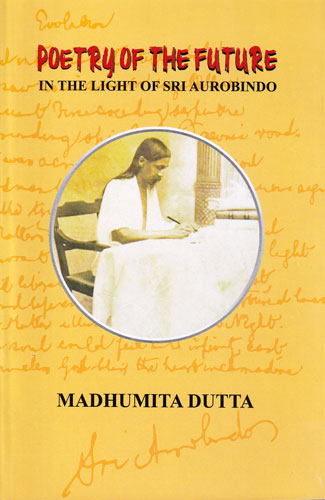
| Price: Rs 550 Pages: 352 Dimensions (in cms): 14x22 ISBN: 978-81-967004-5-4 | Soft Cover | |
| Publisher: Overman Foundation, Kolkata | ||
 | ||

|
Your cart is empty... |
About Poetry of the Future
The study of Sri Aurobindo’s The Future Poetry and his theory of poetics is the subject of this scholarly work, which grew out of a series of talks on the book, streamed on YouTube. The author reflects on Sri Aurobindo as both critic and philosopher and focuses on the book’s exploration of what would be the ideal spirit of poetry. Part One considers how Sri Aurobindo defines and comments on the essential aspects of poetry and his theory of mantric poetry. Part Two is a lengthy analysis of the character and the evolution of English poetry. In Part Three we find the high philosophy that grounds the poetry of the future, the philosophy of Poetic Truth, which Sri Aurobindo describes in discourses on “The Five Suns of Poetry”. The future poetry will demand a new manner of speech capable of holding and expressing the direct self-experience of the soul.
REVIEW
The new 350-page publication by the Overman Foundation of transcribed and edited talks by Dr Madhumita Dutta can be read as an introduction to, overview of, and deeper exploration of aspects of Sri Aurobindo’s 400-page The Future Poetry, Volume 26 of The Complete Works of Sri Aurobindo. As always, Professor Dutta’s writing is delightful and insightful. Especially in its later parts, the flowing style of her reflections in analysis and commentary of particular aspects of Sri Aurobindo’s literary theory and its applications can be immersive and transfixing, transporting us into the world and vision of the seer-poet. Giving examples from different periods of English language poetic developments and their most representative lyricists, as well as translations of and quotes from the Vedas, Upanishads, the Bhagavad Gita and of poems by the likes of Kalidasa and Tagore, Dr Dutta illustrates Sri Aurobindo’s vision of poetry, its history and future evolution.
Sri Aurobindo saw poetry as an expression of the time-spirit and dominant formations and movements in the collective vital mind of a people and culture, and in his vision these trends inevitably move towards a mantric language when the outer instrumentations of expression are taken up by the soul, spirit, and intuition. In this evolution, a sufficiently developed culture of language, literature, and poetry of the outer form, meaning rhythm, movement and style, as well as its inner inspiration and perception, the substance and essence, can culminate in a deeper and higher consciousness elevating speech to the level of mantra. According to Sri Aurobindo, eventually, a future poetry will evolve which is capable of encompassing and expressing the entire human being, nature, states and worlds of consciousness, and various aspects of the divine as well as its oneness in an integral and transformative power of speech and vibration. Then expressive language will become a conscious conduit of higher beings and forces, allowing them to ride poetic streams of inspiration and sight from the subtle and transcendent oceans beyond through the intuitive, inner and expressive mind to our shores of the manifestation, with the Self, Soul, and Psychic guiding them from behind:
Our words become the natural speech of Truth,
Each thought is a ripple on a sea of Light.
This future poetry represented in Sri Aurobindo’s Savitri: A Legend and a Symbol (the lines above are from Book VII, Canto 5: The Finding of the Soul, p. 531) will come about through the ignition and blaze in the collective consciousness of the Five Suns of Poetry, which Sri Aurobindo wrote about in the The Future Poetry:
An intuitive revealing poetry of the kind which we have in view would voice a supreme harmony of five eternal powers, Truth, Beauty, Delight, Life and the Spirit. (CWSA 26: 222)
Before diving into the currents of these prophetic visions, the professor leads up to them through a review of the poetry of the Elizabethan, Intellectual, Romantic, Victorian and Modern ages, as well as that of the “Poets of the Dawn”. Although it’s not linear, the evolution of poetry through the ages follows a general trend of progression of its center of poetic interest, theme, and origin of inspiration from the outer to the inner, from a concern with life in its most material, emotional, and intellectual surface characteristics to a vision of it as a symbol and manifestation of something beyond itself and forms, the ethereal and divine. Dr Dutta fittingly quotes these lines from Sri Aurobindo’s poem “Ascent (2) Beyond the Silence” as an example of intuitive poetry:
Vast, God-possessing, embraced by the Wonderful,
Lifted by the All-Beautiful into his infinite beauty,
Love shall envelop thee endless and fathomless,
Joy unimaginable, ecstasy illimitable,
Knowledge omnipotent, Might omniscient,
Light without darkness, Truth that is dateless. (CWSA 02: 582)
As Dr Dutta explains, based on Sri Aurobindo’s writings, all of these phases of growth or decline in a people’s complexity and range of consciousness and its expression are shaped by cultural forces of which individual poets who rise to prominence are only the most visible or representative symbol, not the ones originating or shaping it from their personal ego. The role of the community of a people united by language in the refinement of expressive power and ability to receive inspiration from more profound and elevated sources within and above is emphasised, although this development is of course in dialogue and exchange with other previous and concurrent communities of language. In Dr Dutta’s understanding, for the future Sri Aurobindo “is proposing a spiritual aesthesis, elevating poetry to the highest status it deserves, but this spiritual poetry will be more universal and created in many languages, especially English. Because, as he said, not only is English the most widespread tongue, capable of greatest mystic expression, but the mind of the future will also be more international.”
—Matthias Pommerening
Matthias, a psychologist, is a frequent contributor of book reviews for Recent Publications.
February 2026
Sri Aurobindo saw poetry as an expression of the time-spirit and dominant formations and movements in the collective vital mind of a people and culture, and in his vision these trends inevitably move towards a mantric language when the outer instrumentations of expression are taken up by the soul, spirit, and intuition. In this evolution, a sufficiently developed culture of language, literature, and poetry of the outer form, meaning rhythm, movement and style, as well as its inner inspiration and perception, the substance and essence, can culminate in a deeper and higher consciousness elevating speech to the level of mantra. According to Sri Aurobindo, eventually, a future poetry will evolve which is capable of encompassing and expressing the entire human being, nature, states and worlds of consciousness, and various aspects of the divine as well as its oneness in an integral and transformative power of speech and vibration. Then expressive language will become a conscious conduit of higher beings and forces, allowing them to ride poetic streams of inspiration and sight from the subtle and transcendent oceans beyond through the intuitive, inner and expressive mind to our shores of the manifestation, with the Self, Soul, and Psychic guiding them from behind:
Our words become the natural speech of Truth,
Each thought is a ripple on a sea of Light.
This future poetry represented in Sri Aurobindo’s Savitri: A Legend and a Symbol (the lines above are from Book VII, Canto 5: The Finding of the Soul, p. 531) will come about through the ignition and blaze in the collective consciousness of the Five Suns of Poetry, which Sri Aurobindo wrote about in the The Future Poetry:
An intuitive revealing poetry of the kind which we have in view would voice a supreme harmony of five eternal powers, Truth, Beauty, Delight, Life and the Spirit. (CWSA 26: 222)
Before diving into the currents of these prophetic visions, the professor leads up to them through a review of the poetry of the Elizabethan, Intellectual, Romantic, Victorian and Modern ages, as well as that of the “Poets of the Dawn”. Although it’s not linear, the evolution of poetry through the ages follows a general trend of progression of its center of poetic interest, theme, and origin of inspiration from the outer to the inner, from a concern with life in its most material, emotional, and intellectual surface characteristics to a vision of it as a symbol and manifestation of something beyond itself and forms, the ethereal and divine. Dr Dutta fittingly quotes these lines from Sri Aurobindo’s poem “Ascent (2) Beyond the Silence” as an example of intuitive poetry:
Vast, God-possessing, embraced by the Wonderful,
Lifted by the All-Beautiful into his infinite beauty,
Love shall envelop thee endless and fathomless,
Joy unimaginable, ecstasy illimitable,
Knowledge omnipotent, Might omniscient,
Light without darkness, Truth that is dateless. (CWSA 02: 582)
As Dr Dutta explains, based on Sri Aurobindo’s writings, all of these phases of growth or decline in a people’s complexity and range of consciousness and its expression are shaped by cultural forces of which individual poets who rise to prominence are only the most visible or representative symbol, not the ones originating or shaping it from their personal ego. The role of the community of a people united by language in the refinement of expressive power and ability to receive inspiration from more profound and elevated sources within and above is emphasised, although this development is of course in dialogue and exchange with other previous and concurrent communities of language. In Dr Dutta’s understanding, for the future Sri Aurobindo “is proposing a spiritual aesthesis, elevating poetry to the highest status it deserves, but this spiritual poetry will be more universal and created in many languages, especially English. Because, as he said, not only is English the most widespread tongue, capable of greatest mystic expression, but the mind of the future will also be more international.”
—Matthias Pommerening
Matthias, a psychologist, is a frequent contributor of book reviews for Recent Publications.
February 2026
